
Criminal Cases in Clinch County Courts
Clinch County Superior Court is the felony trial court. Its clerk files criminal cases, court warrants, pleadings, docket entries, judgments, and sentences at 25 Court Square, Suite C, in Homerville. The office also serves Juvenile Court, but that role does not make juvenile files public. Superior Court terms begin on the third Monday in March and September under O.C.G.A. §15-6-3. Hearings and filings still occur outside those term-opening dates.
Jurisdiction explains many failed searches. Clinch County Magistrate Court issues warrants, conducts first appearances and commitment proceedings, and handles bail within its authority. A felony then moves to Superior Court after prosecutor review and indictment or accusation. Homerville Municipal Court keeps city ordinance and traffic matters. Georgia does not have one central traffic citation database, so a municipal ticket or bench-warrant question belongs with the city clerk, not the Superior Court search.
Clinch County PeachCourt Case Access
The Georgia Courts E-Access directory routes a Clinch County Superior Court search to PeachCourt. The directory is a provider map, not a single state-owned docket. An account is required, and the provider may control document availability or charges. The PeachCourt interface can locate a case by exact number or by party name, court, and date details.
The official court-directory capture shows where Clinch County users enter the remote system. That distinction matters because an account screen is not proof that every old paper file has been digitized.
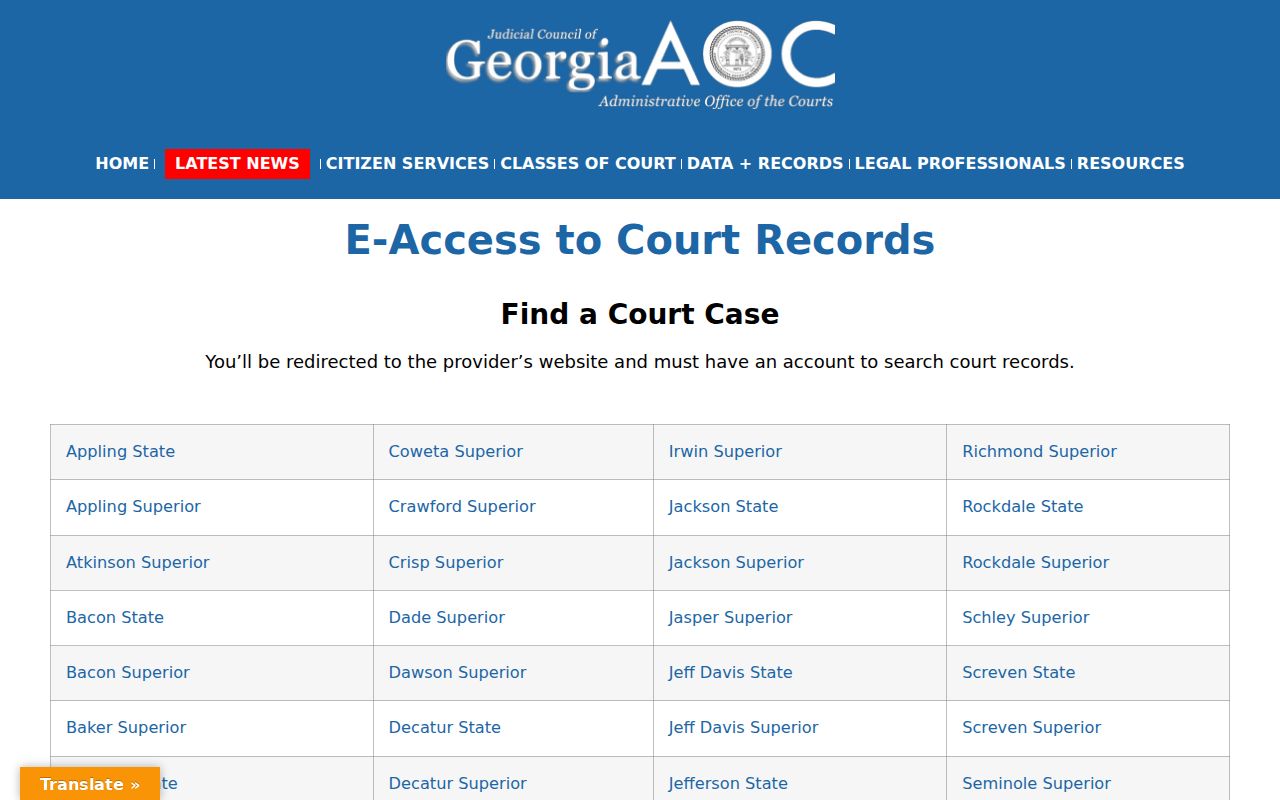
Use the directory to confirm the provider before entering names. Then treat document images as convenient copies until the clerk certifies the court record.
Search results can show a status, assigned judge, attorneys, hearing dates, and available images. Open the docket before drawing a conclusion from the status line. A case marked closed may still have a later probation order, amended sentence, appeal entry, or restriction filing. Likewise, a charge description in the result list may not reflect how each count ended. Clinch County court records are most useful when the reader traces the entries through the signed judgment.
The provider's own case-access page shows the account-controlled entry point used for Clinch County court records.
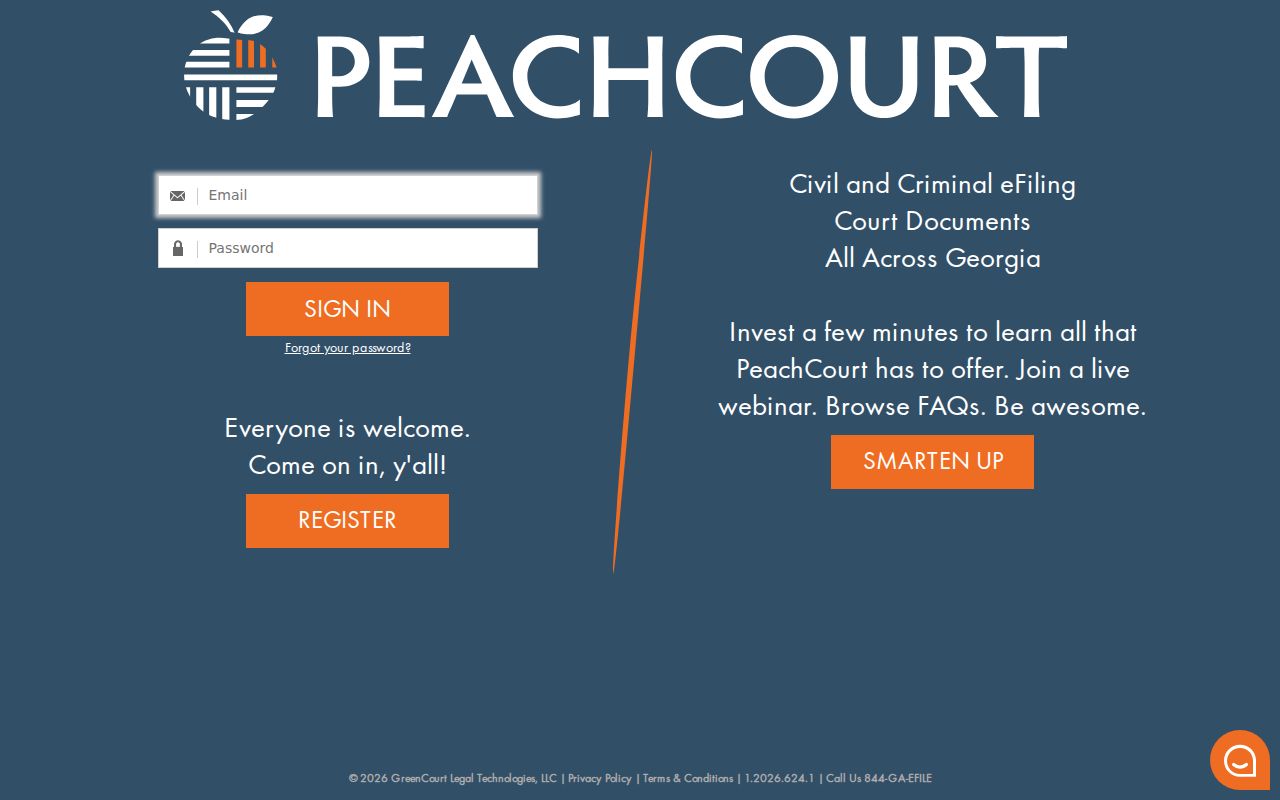
The provider view helps a remote user reach the docket, while the clerk remains responsible for the official Clinch County file and certified copies.
| Search field | Best use | Limit |
|---|---|---|
| Case number | Exact Clinch County case match | Must include the correct court format |
| Party name | Find a case when the number is unknown | Common names can return several people |
| Court | Limit results to Clinch Superior Court | Will not find another circuit county |
| Filing date | Separate similar names and cases | Arrest date may differ |
| Case type | Separate criminal from civil matters | Category labels vary by provider |
How to Search Case Records
Start with the strongest identifier. A complete case number is better than a name, and the filing date is more useful than the arrest date. Clinch County is one of five counties in the Alapaha Judicial Circuit, so the same judges may appear on files held by different clerks. A case from Atkinson, Berrien, Cook, or Lanier County will not become a Clinch County file merely because a circuit judge heard it.
- Open the state e-access directory and select Clinch Superior Court.
- Create or sign into the provider account, then use the exact case number when known.
- If searching by name, add the court, filing period, and charge details to separate similar people.
- Open the docket and locate the charging paper, judgment, disposition, and sentence.
- Call the clerk at 912-487-5854 for an archived file or a certified copy.
A missing online result is not a finding that no Clinch County criminal case exists. Ask the clerk about spelling, former names, archived coverage, restricted status, or a paper-only file.
Clinch County Certified Court Files
The remote docket is built for access. The clerk's file is the source for proof. Mary Ruth Handley's office can help locate older pleadings, final orders, and certified records. The county does not publish a current per-page or certification fee, so ask for the amount before ordering. A plain copy is useful for reading. A certified copy carries the clerk's authentication and is the safer choice when the exact judicial outcome matters.
Before calling, gather the defendant's full name, likely filing year, charge, and any known case number. State which paper is needed. Asking for the final disposition or sentence order is more precise than asking for every criminal record tied to a name. Staff can also tell a requester whether inspection, mail, fax, or another delivery method is available for that Clinch County file.
Clerk of Superior Court
25 Court Square, Suite C
Homerville, GA 31634
912-487-5854
Fax: 912-487-2316
The Alapaha Circuit office directory places the Clinch County desk within the five-county court system.
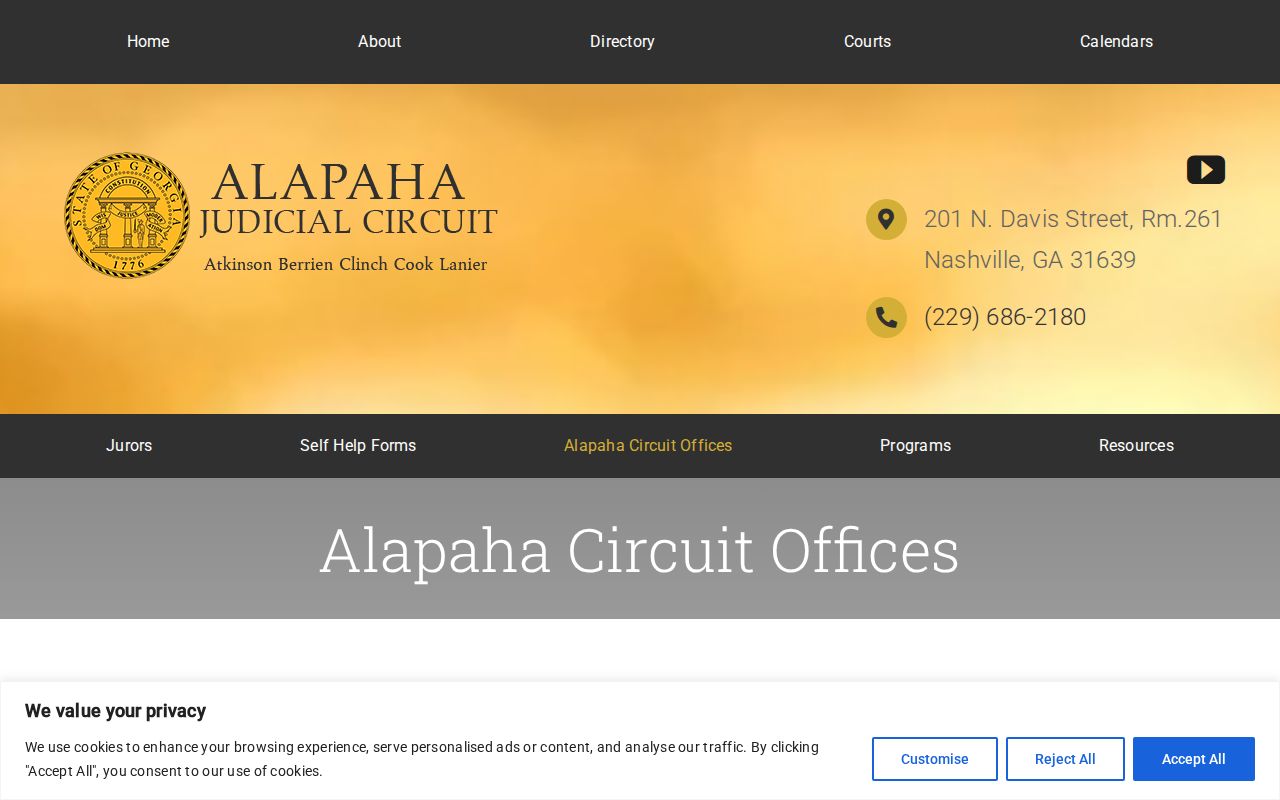
The circuit listing helps identify the right office without confusing a regional judge or prosecutor with the custodian of the Clinch County case file.
What the Case File Shows
A court file records what prosecutors filed and what the court did. It is not the same as the sheriff's arrest report or jail booking sheet. Review the docket from the charging instrument through the last judgment rather than stopping at the first charge description.
| Case number and court | Identifies the Clinch County court file and its jurisdiction. |
|---|---|
| Charging document | Shows the indictment, accusation, or citation actually filed. |
| Docket entries | Chronological list of filings, orders, motions, and hearings. |
| Parties and counsel | Names the defendant, prosecutor, and listed attorneys. |
| Disposition and judgment | States how each filed count ended. |
| Sentence and conditions | Records confinement, supervision, fines, or other terms in the order. |
Balances, image availability, and a case status shown by a provider can grow stale. Confirm those details with the clerk before relying on them.
Clinch County Disposition Terms
Short docket labels carry distinct results. Read the final order with the label because one word rarely explains every count or condition.
- Dismissed
- The filed charge ended without a conviction in that case. The arrest record does not vanish on its own.
- Nolle prosequi
- The prosecutor formally ended the charge, subject to the legal terms shown in the file.
- Nolo contendere
- A plea that does not contest the charge and can still carry conviction consequences.
- First offender
- A Georgia statutory treatment that may avoid an adjudication of guilt after successful completion. The order controls.
If a GCIC history lacks the disposition, obtain a certified Clinch County judgment and use it with the contributing-agency correction process. Names alone are weak identifiers. Match the case number, arrest date, agency, and charge.
Stages of a Criminal Case
A Clinch County felony file grows in stages. The arrest or citation may begin the event, but the court record takes shape after prosecutor review. An arraignment is the hearing where the accused is called to answer the formal charge. Pretrial entries may include discovery, motions, bond orders, and plea talks. A judgment follows a plea or trial, and sentence terms appear in a later entry or combined order.
Case flow: Charges Filed › Arraignment › Pretrial › Plea or Trial › Disposition › Sentencing
The timeline can branch. Appeals and post-judgment motions add later entries. Supervision records then belong to the relevant probation or corrections custodian, not solely to the court.
Clinch County Traffic Case Routing
Homerville Municipal Court citations are not Superior Court felony files. The city clerk handles municipal citation questions, and Georgia Courts warns that the state has no centralized traffic-ticket database. The official traffic citation directory lists participating local systems but cannot promise one search for every city.
The state citation capture reinforces that local routing rule.
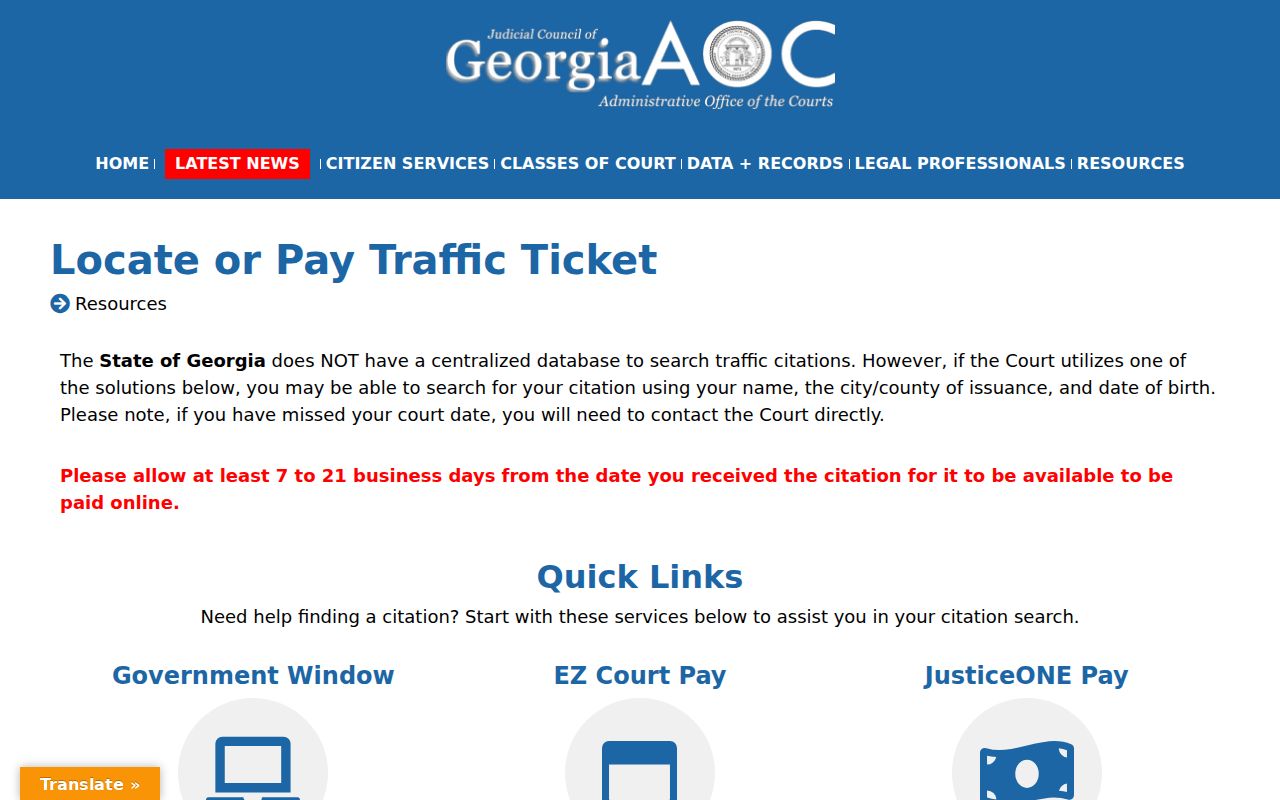
Follow the court printed on the citation. For Homerville, Municipal Court Clerk Lucy Ann Wells can be reached through the police office at 912-487-5306 ext. 1301. If the matter became a felony prosecution, search the resulting Superior Court case separately.
Access and Restrictions
Georgia court records are generally open, but public access has limits. Juvenile cases, sealed files, protected victim or child information, Social Security numbers, and sensitive documents may be withheld or redacted. Provider access can also differ from the full clerk file. A blank image list may mean the document is not online, not that the filing never occurred.
Georgia record restriction under O.C.G.A. §35-3-37 limits access to eligible GCIC history. It does not automatically erase a Clinch County court file. A separate petition to seal related clerk records may be needed when the statute allows it. For a case that remains visible after an order, give the clerk the case number and a copy of the sealing order. The broader Clinch County criminal history overview explains why court, jail, and state records can update at different times.
Missing Clinch County Case Results
When PeachCourt returns nothing, check the court and date first. Then try known name variants and the full case number. Call the Superior Court clerk for archive coverage, sealed status, and copy procedure. A warrant may still be at Magistrate Court, while a traffic matter may remain with Homerville Municipal Court. One search cannot clear all three channels.
When the docket exists but the result is incomplete, ask for the final signed judgment. Compare each count, not just the headline charge. That certified Clinch County record is the sound basis for correcting a missing disposition elsewhere.
A prosecutor's action may end one count while another proceeds. Read the charging paper beside the final order and check for later amendments. If a docket entry uses an unclear code, ask the clerk for the filed document instead of guessing from an abbreviation. This extra check keeps an old allegation from being mistaken for the final Clinch County court result.